
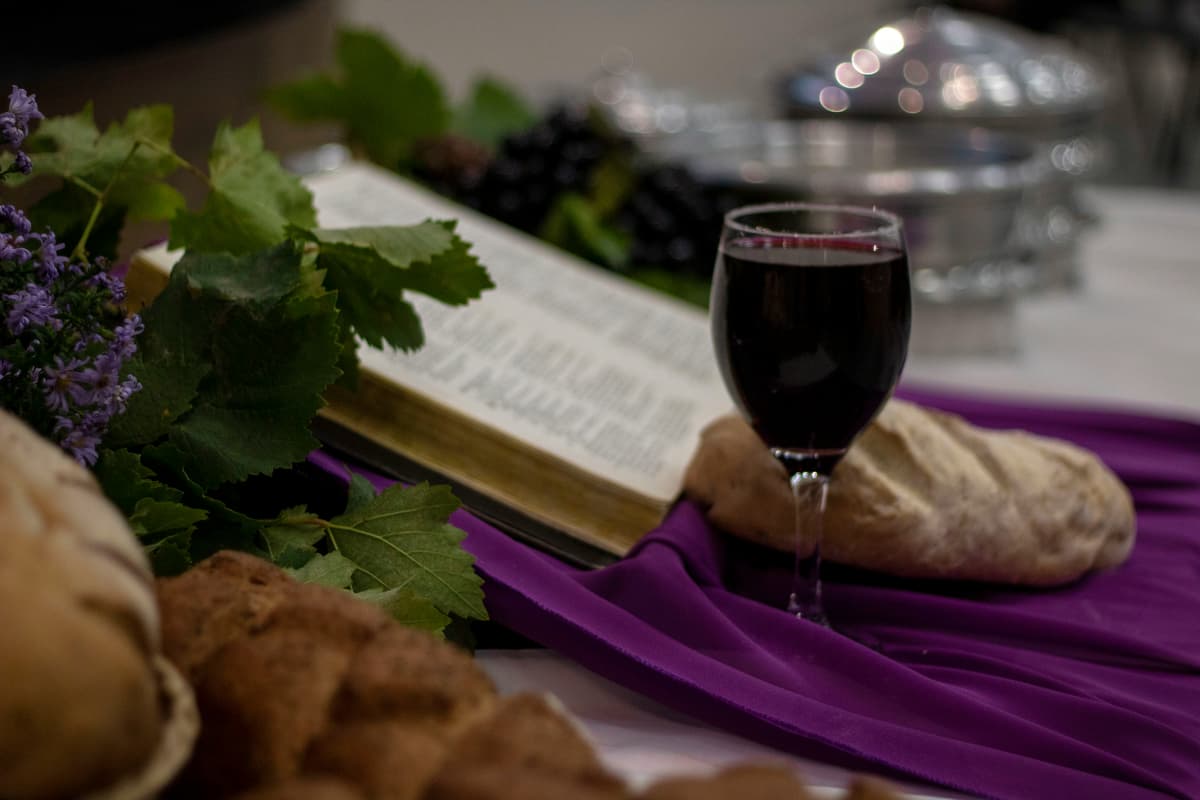
The Seven Feasts
שבעת המועדים
They Are Not What Most People Think
Most people encounter the biblical feasts one of two ways. Either they are dismissed as "Old Testament Jewish stuff" that no longer applies — or they become a measuring stick, a checklist that separates the serious from the casual, the in from the out.
Both of those readings miss the point entirely.
The seven feasts are not a performance requirement. They are not a ranking system. They are signposts — markers on a map that Abba laid out before any of us arrived, pointing to what He was always planning to do and is still unfolding. They are love letters written in calendar form.
And at the center of all of them — before the ritual, before the observance, before the question of who is keeping them correctly — is this: love.Love Abba with everything you are. Love each other the same way. Everything else, including the feasts, hangs on those two.
What They Are Actually For
Abba's Torah — including His feasts and set-apart days — is good. But it was never given so we could judge or rank one another. It trains the heart toward humility, gratitude, and obedience, while grace in the Messiah covers what we get wrong along the way.
Whether someone keeps every feast, is still learning what they even mean, or is somewhere in the middle — what matters most is a heart turned toward the Most High and genuine love for the people around you. That is what delights Him. The rest is a response to that, not the condition for it.
The Seven — A Map, Not a Checklist
Pesach (Passover) — 14th day of the first month
- The night Abba passed over the homes marked by the lamb's blood and delivered Israel from Mitsrayim. The original act of redemption through substitution.
- Points directly to the Messiah — our Passover Lamb — whose blood brings forgiveness and reconciliation to anyone who receives it.
- A solemn and grateful time to remember what was paid and examine what we are living for.
Chag HaMatzot (Feast of Unleavened Bread) — 15th–21st of the first month
- Seven days without leaven — a picture of a life without the corruption that quietly works its way through everything it touches.
- Not about outward perfection. About a sincere desire to let Abba remove what does not belong. Sincerity over performance, always.
Shavuot (Feast of Weeks / Pentecost) — 50 days after the wave-sheaf
- The early harvest. Traditionally the giving of Torah at Sinai. In the Brit Hadashah — the day the Ruach of the Most High was poured out on the gathered believers in power.
- The reminder that we are not left to do this in our own strength. Abba writes His ways on the heart. That is the whole point.
Yom Teruah (Day of Trumpets) — 1st day of the seventh month
- The shofar sounds. Something is being announced. A call to wake up, to prepare, to pay attention to what Abba is about to do.
- Many see in it the foreshadowing of the Messiah's return and the gathering of His people. The trumpet has not sounded yet.
Yom Kippur (Day of Atonement) — 10th day of the seventh month
- The most solemn day in the biblical calendar. The day the high priest entered where no one else could go — to make atonement for the entire people.
- Deep humility. Deep repentance. The recognition that we stand only by His mercy, not our record. Atonement is His work. We receive it. That is all.
Sukkot (Feast of Tabernacles) — 15th–21st of the seventh month
- A week of rejoicing in temporary shelters — remembering the wilderness years when Abba covered and provided for a people who had nothing but His presence.
- Looks forward to the time when He dwells with His people in fullness. Joy, generosity, gratitude. Family. The feast of the nations.
Shemini Atzeret (The Eighth Day) — 22nd of the seventh month
- The feast after the feast. Abba keeps one more day — as if after the whole cycle He simply wants one more day with His people before they go home.
- A picture of completion. New beginnings. The final stage of a plan that was never about judgment — it was always about restoration.
Law, Grace, and the Only Thing That Actually Matters
Keeping the feasts, honoring set-apart days, choosing a kosher diet — these are beautiful responses of love and obedience. But they are not the center of the good news. They were never meant to be the center.
The Messiah said it plainly: all of the Torah and the Prophets hang on two commands. Love the Most High with everything you are. Love your neighbor as yourself. If someone keeps every feast and lacks love — they missed it. If someone is only beginning to learn what these days even mean but genuinely loves Abba and loves the people around them — they are walking in what delights Him.
The feasts are not a wall. They are a window. Look through them and you will see the same thing every time — a Father who has been planning, from the very beginning, to bring His people home.
Closing Reflection
Approach these days with curiosity, not obligation. With gratitude, not performance. Let them do what they were designed to do — remind you who Abba is, what He has done, and how far He was willing to go to make sure you knew He was coming back for you.
That is the feast. That has always been the feast.