The Light That Refused
חנוכה — חג האורים
Before We Talk About the Miracle
Hanukkah is not one of the seven biblical feasts. That matters — not to diminish it, but to understand it correctly. The seven moedim were given through Moses at Sinai. Hanukkah comes later, from a different kind of moment — a moment of crisis, occupation, and a small group of people who refused to let something sacred be extinguished.
The Messiah himself walked in the Temple during the Feast of Dedication (John 10:22). He did not correct it. He did not avoid it. He was there — in the middle of it — teaching. That tells you something about how to hold this season.
What Actually Happened
Around 165 BCE, the Seleucid king Antiochus IV Epiphanes did something that history has a name for — the Abomination of Desolation. He desecrated the Temple in Jerusalem. He banned Torah observance. He set up an altar to Zeus in the Most Set-Apart Place and sacrificed a pig on it.
He was not subtle about what he was trying to do. He was trying to erase a people by erasing their identity. Remove the language. Remove the practice. Remove the memory. And eventually there will be nothing left to resist.
It almost worked.
A priestly family — the Maccabees — said no. Outnumbered. Outarmed. Up against the most powerful empire in the region. They said no anyway. And they fought. And somehow — against everything the odds said should happen — they reclaimed the Temple.
The Oil
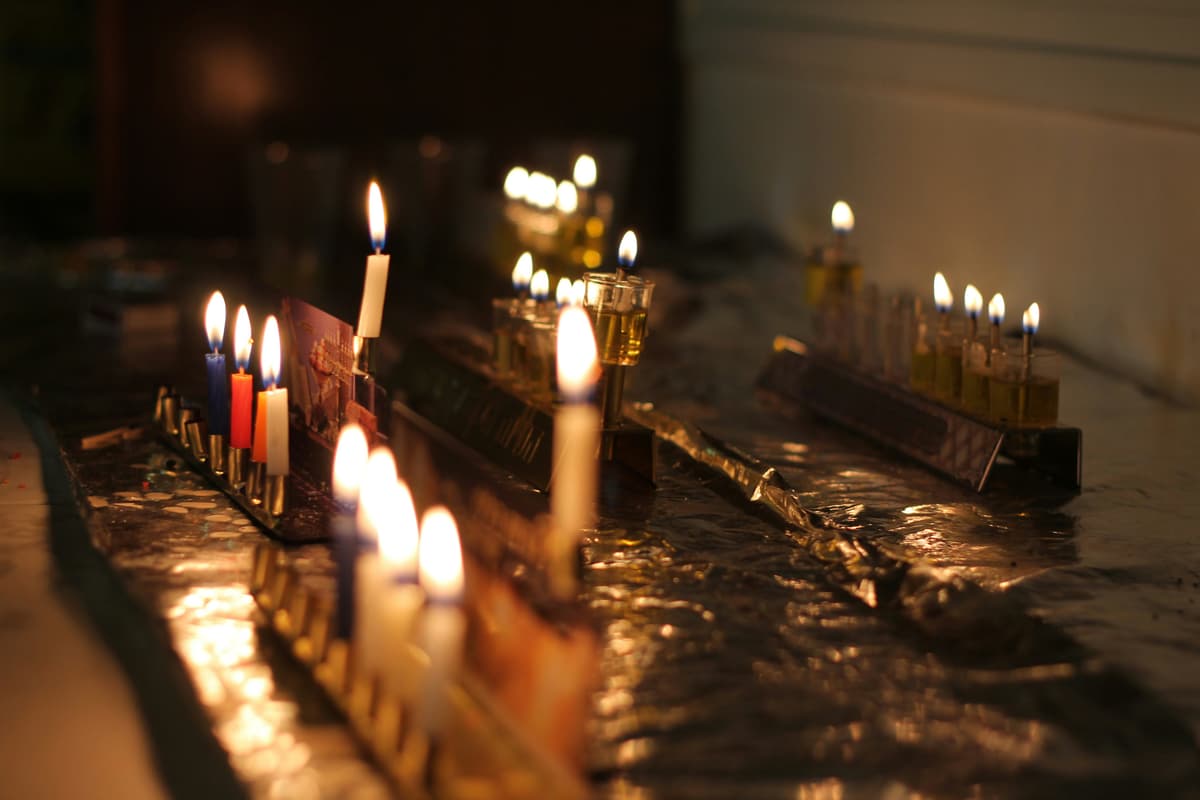
When they came to rededicate the Temple and relight the menorah — the lamp that was never supposed to go out — they found only one small vessel of consecrated oil. Enough for one day. It would take eight days to prepare more.
They lit it anyway.
It burned for eight days.
That is the miracle of Hanukkah. Not the military victory — though that was remarkable. The light. The light that should have lasted one day and lasted eight instead. The light that refused to go out even when everything said it should have.
What the Light Is Actually About
There is a principle buried in this story that goes far beyond oil and lamps.
They did not wait until they had enough. They did not wait until conditions were right, until the new oil was prepared, until everything was in order. They lit what they had. And Abba honored the lighting.
This is the Hanukkah teaching that matters most to me personally — and it is the one that gets lost in the dreidels and the latkes and the cultural celebration:
You do not need to have enough to begin. You need to be willing to light what you have.
The miracle does not happen before the lighting. It happens because of it.
Darkness Cannot Extinguish Light — Only the Absence of Lighting Can
Antiochus did not ultimately fail because the Maccabees were stronger. He failed because they refused to stop being a light. Darkness has no power over light. Darkness is the absence of light. The only way to have darkness is to have no one willing to light anything.
We live in a moment that has a great deal in common with that one. The pressure to assimilate. To be quiet. To dim down. To make the message more palatable, more comfortable, more acceptable to the empire of the current moment.
The answer is the same as it was then. Light the lamp. With what you have. Where you are. And let Abba determine how long it burns.
Why Eight Days
Seven in Hebrew thought represents completion — the natural cycle, the Sabbath, the fullness of what was created. Eight represents something beyond the natural. The eighth day is the day of new beginnings — the day of circumcision, the day after the Sabbath, the day that points beyond the cycle into something that the cycle cannot contain.
The oil burned for eight days — not seven. Not just enough to complete the natural cycle. One day beyond it. Into the supernatural. Into the territory that belongs to Abba alone.
When you light what you have and trust Him with the rest — you are operating in eight-day territory. Beyond what the natural accounting says is possible.
Closing Reflection
Hanukkah means dedication. The feast is named not for the miracle of the oil — but for the act of rededicating what had been desecrated. Of taking back what was taken. Of saying: this place is set apart again. This lamp will burn again. We are not done.
Whatever in your life has been desecrated — whatever light has been dimmed by occupation, by pressure, by time — Hanukkah is the invitation to rededicate it.
Light the lamp. With what you have. Abba will handle the oil.